Cement: how to use it, and how much you need
Cement is the binder in plaster, brickwork and blockwork mortar, RCC slabs, beams, columns and footings, and the base course under flooring. The same 50 kg bag does all of it in a Kanpur house — only the mix ratio and the grade change. It is not a finish and not a waterproofer: cement plaster still needs putty or paint over it, and a leaking roof or damp wall needs a proper waterproofing system, not a richer cement mix.
What you can do with it, and how much it takes
Plastering a wall
150 sq ft per 50 kg bag, 12 mm plaster in 1:6
Brickwork
1.1 bags of cement per 35 cft of brickwork in 1:6 mortar
Concrete slab (M20)
8 bags of cement per 35 cft of M20 concrete (1:1.5:3)
Floor bed / PCC (1:2:4)
6.4 bags of cement per 35 cft of 1:2:4 concrete
How to use it
Wet the brickwork the evening before and again in the morning — dry brick pulls water out of the mortar and the plaster cracks in a week. Fix level dots, then batch with a farma (gauge box), not by spade count: one 50 kg bag fills roughly 1.25 cft, so one box of cement to six boxes of sand gives a true 1:6. Mix only what you will use in 30 minutes, lay 12 mm in one pass on internal walls, level with the aluminium patti between the dots, and finish with the thapi. Never add water to mortar that has started to stiffen — re-tempered mortar loses strength permanently. Start wet curing the next morning and keep the surface damp for seven days; IS 456 requires not less than 10 days in dry hot weather, which is most of April to June in Kanpur.
Tools you'll need
- Farma (gauge box) for batchingask us to source it
- Karni (mason's trowel)ask us to source it
- Thapi (wooden float)ask us to source it
- Aluminium patti (6 ft straight edge)ask us to source it
- Ghamela / tasla (steel pan)ask us to source it
- Phawda (mixing spade)ask us to source it
- Sand sieve (chalni)ask us to source it
- Spirit level, plumb bob and dori setask us to source it
- Curing hose or pressure sprayerask us to source it
- Plumb bob, spirit level and dori setask us to source it
- Needle vibratorask us to source it
- Tamping rod / plate compactorask us to source it
Related material
- Fine sand (plaster grade)ask us to source it
- Integral waterproofing compound (Dr Fixit Pidiproof LW+ or equivalent)ask us to source it
- Gunny bags / hessian cloth for curingask us to source it
- Chicken mesh (GI jaali) for junction stripsask us to source it
- Red clay bricksask us to source it
- Fine sand for the mortarask us to source it
- 20mm gitti (coarse aggregate)ask us to source it
- 10mm gitti (coarse aggregate)ask us to source it
- Coarse sandask us to source it
- TMT steel — quantity from your bar scheduleask us to source it
- Shuttering ply and propsask us to source it
- Binding wireask us to source it
- Cover blocksask us to source it
Safety
- Rubber glovesask us to source it
- Dust maskask us to source it
- Safety gogglesask us to source it
- Gum bootsask us to source it
- Safety helmetask us to source it
Common mistakes
- Ordering external plaster on the internal figure. Internal is 12 mm, external is 15-20 mm, so a bag drops from 150 sq ft to 125 or 95. Buy the whole house on the 150 figure and you will be 30-55 percent short on the outside face.
- Buying 53 grade for plaster because it sounds stronger. UltraTech points builders at 43 grade or PPC for plaster and masonry and keeps 53 for RCC. 53 sets fast and runs hotter, so in a thin plaster coat it gives you more shrinkage cracks, not a better wall.
- Volume-batching above M20. IS 456 clause 9.3 permits nominal mixes only for M20 and lower; M25 and above must be a design mix. A site mix called 1:1:2 is not M25 and will not test as M25.
- Cutting curing short. IS 456 clause 13.5.1 asks for at least 7 days wet curing and not less than 10 days in dry hot weather. A slab that was not cured never reaches its grade, and adding extra cement does not buy it back.
- Buying two months of cement in one lot and stacking it on the floor against a wall. Cement takes up damp and loses strength; IS 1489 clause 8 requires weather-proof storage. Stack on a wooden platform clear of walls and use bags in the order they arrived.
Buying tips
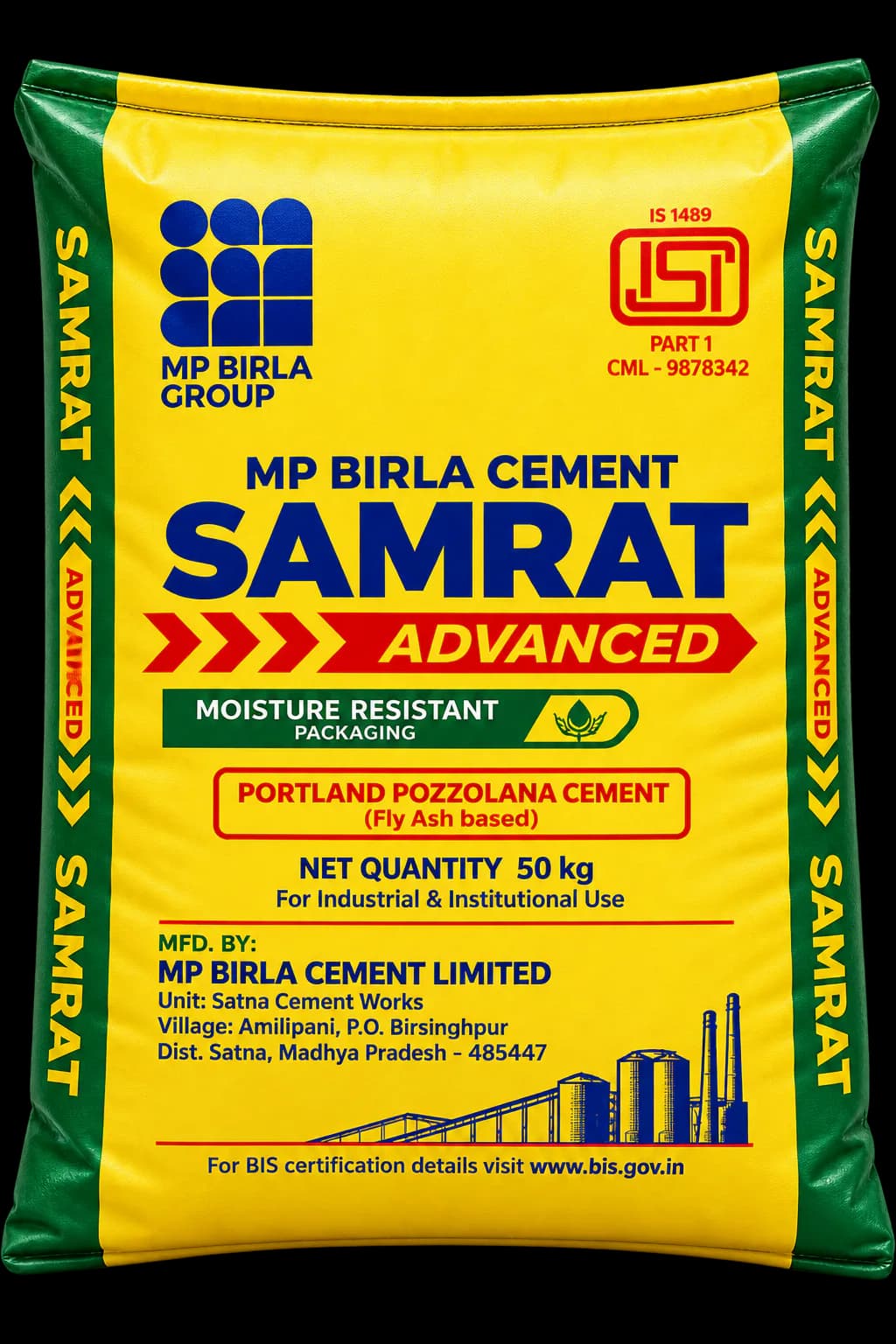
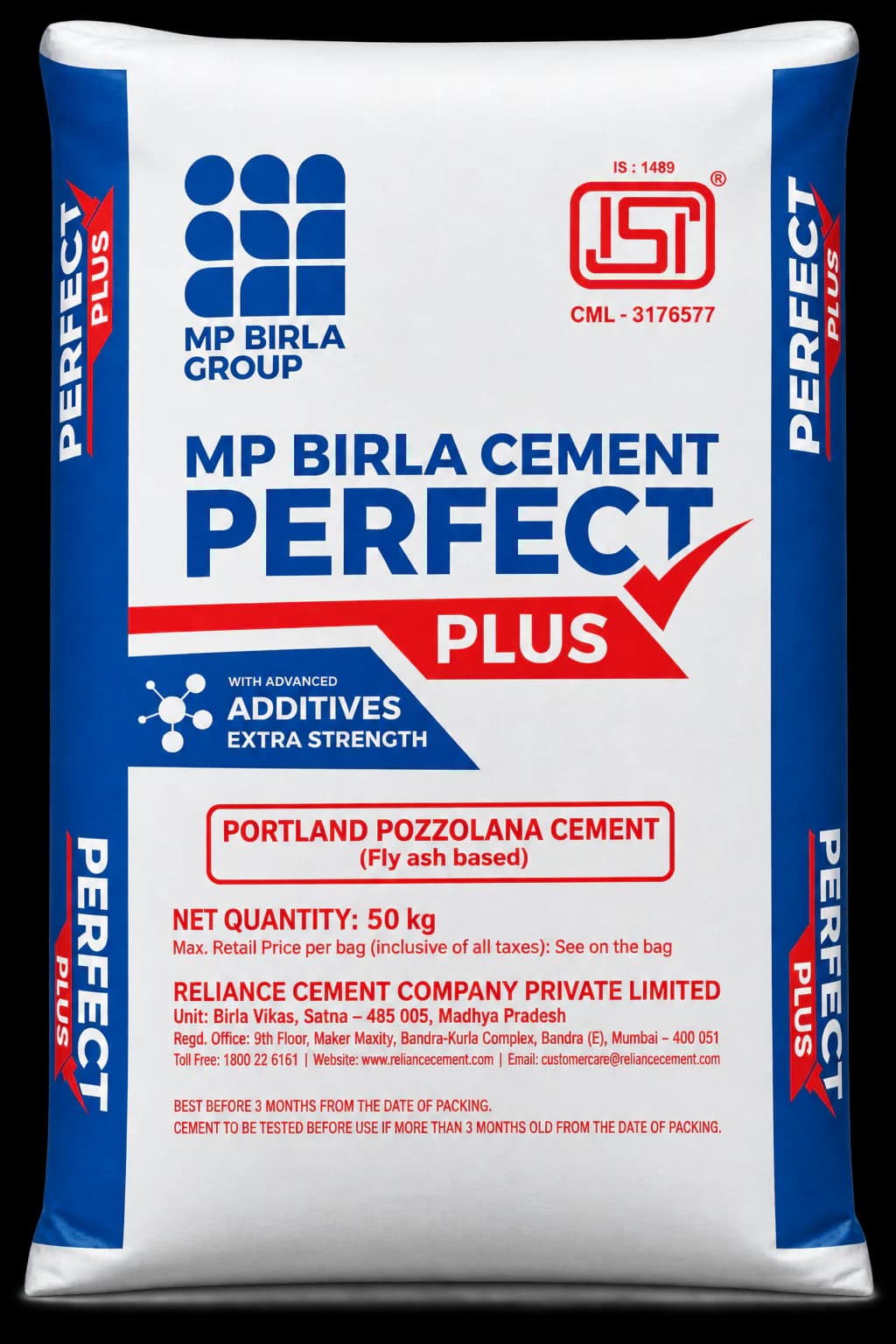
- Read the bag face before you accept the load. It must carry the ISI mark with the BIS licence number (CM/L-...), the IS number for the type you asked for (IS 269 for OPC, IS 1489 Part 1 for PPC, IS 455 for PSC), and the week and year of manufacture. Cement is under mandatory BIS certification, so no licence number, or a smudged or reprinted date, is a refuse.
- Weigh two or three bags at random off the truck. IS 1489 Annex B sets the average net mass at 50 kg, allows no more than 5 percent of bags to be over 2 percent light, and no single bag more than 4 percent light. A bag under 48 kg is out of spec, and across 200 bags that shortfall is a real bill.
- Buy the grade the job needs, not the grade the shop is pushing. PPC or OPC 43 for plaster, brickwork and general work; OPC 53 where you want early strength in slabs, beams and columns. PPC gains strength slower but keeps gaining, which suits masonry and plaster in a hot climate.
- Squeeze a handful from an opened bag. Fresh cement is cool, free-flowing and crushes straight to powder. Hard lumps that will not break between your fingers mean the bag has taken damp in the godown and the strength is already gone — that stock is not worth a discount.
Doing the whole house?
Send us the sizes and we will come back with one costed list and a project rate.
Ask for a project rate